Showing posts sorted by date for query Portland. Sort by relevance Show all posts

Saturday, February 17, 2024

New Westminster, BC

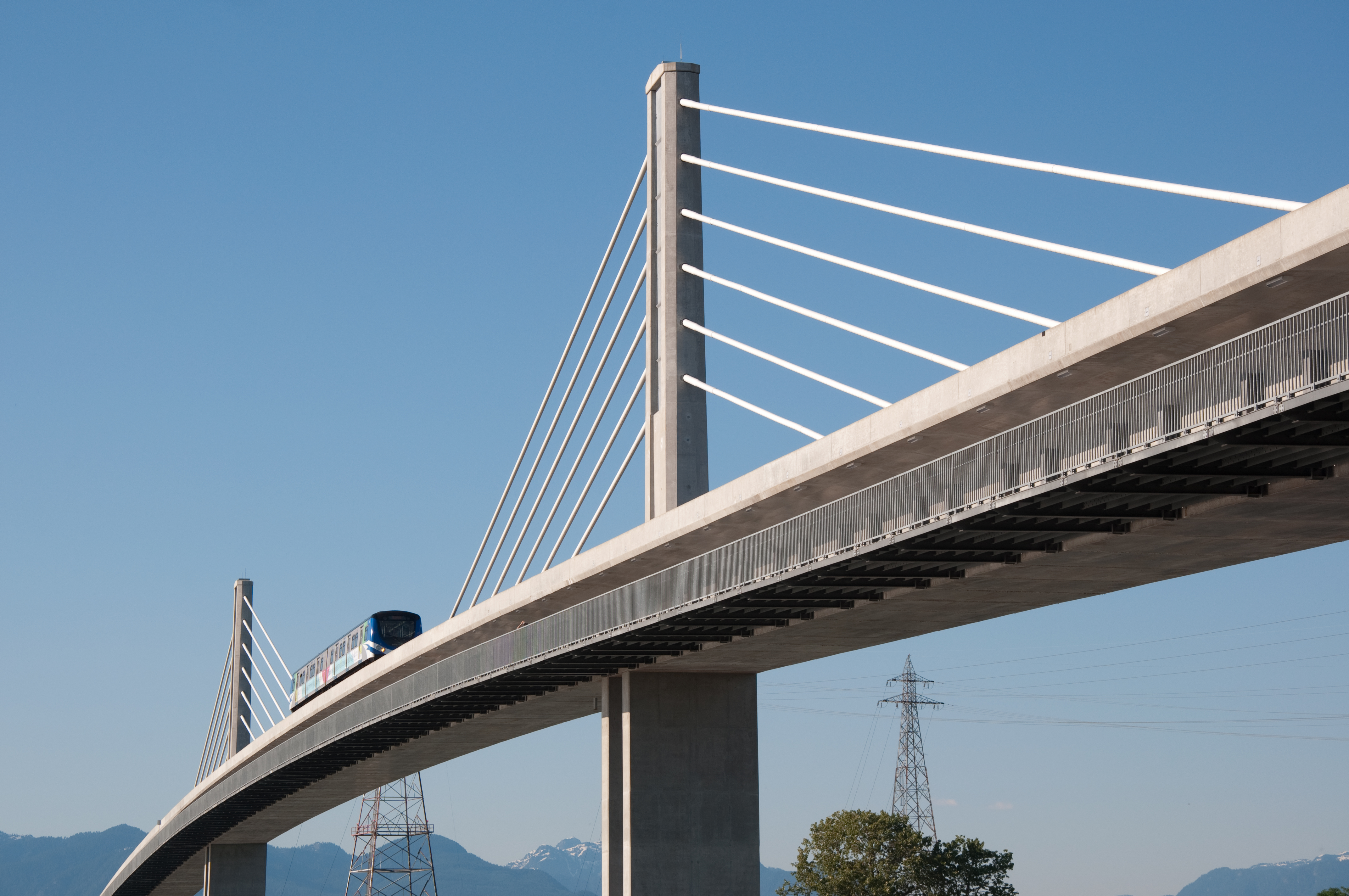
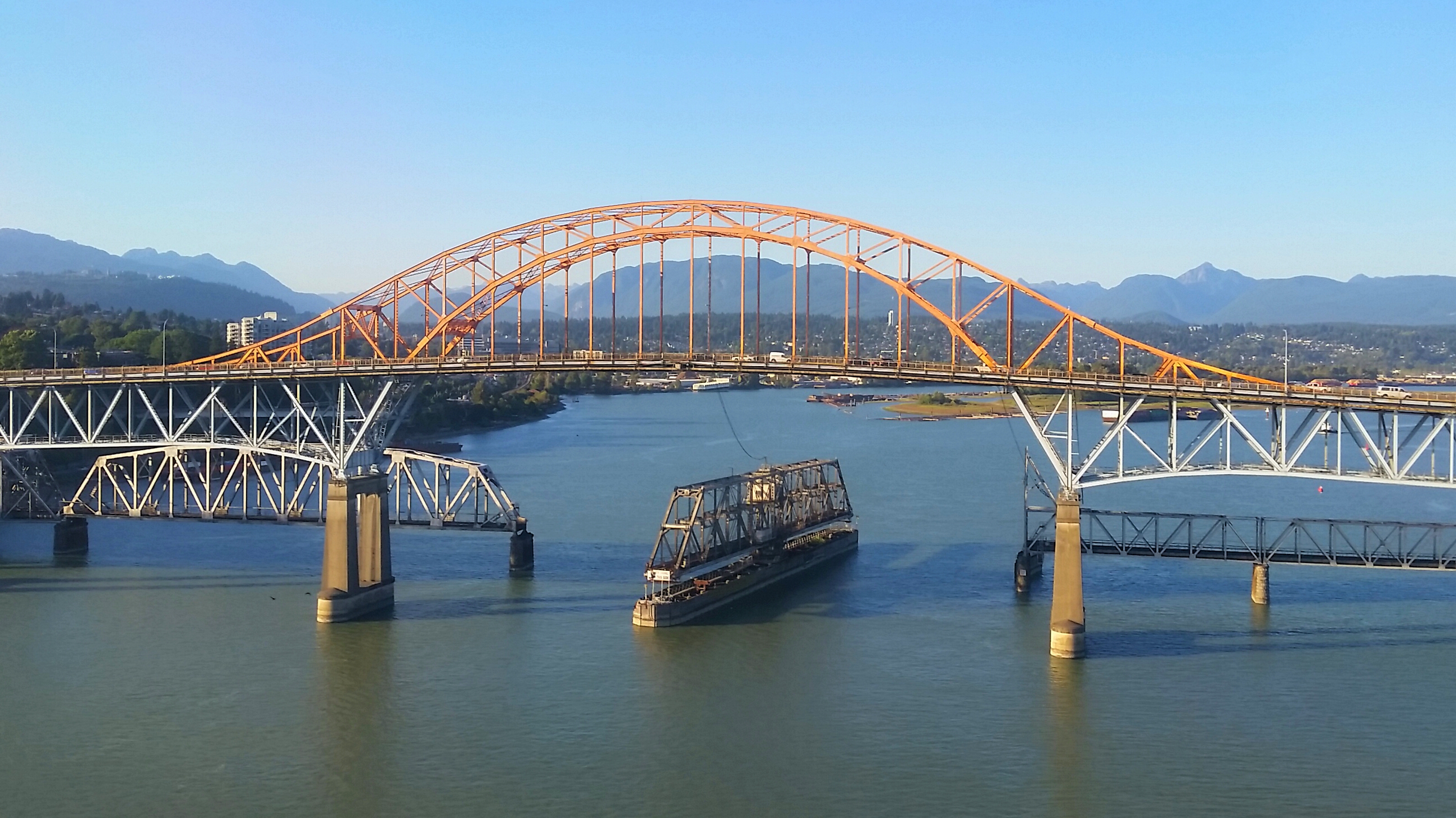
Unfortunately, the little river city of New+Westminster never saw itself as having the same potential as Portland, Oregon. NW eventually went from being a backwater BC capital to becoming part of the Greater Vancouver Metropolitan Area. Unlike Portland, it has always been reluctant towards having wide train & road bridges.

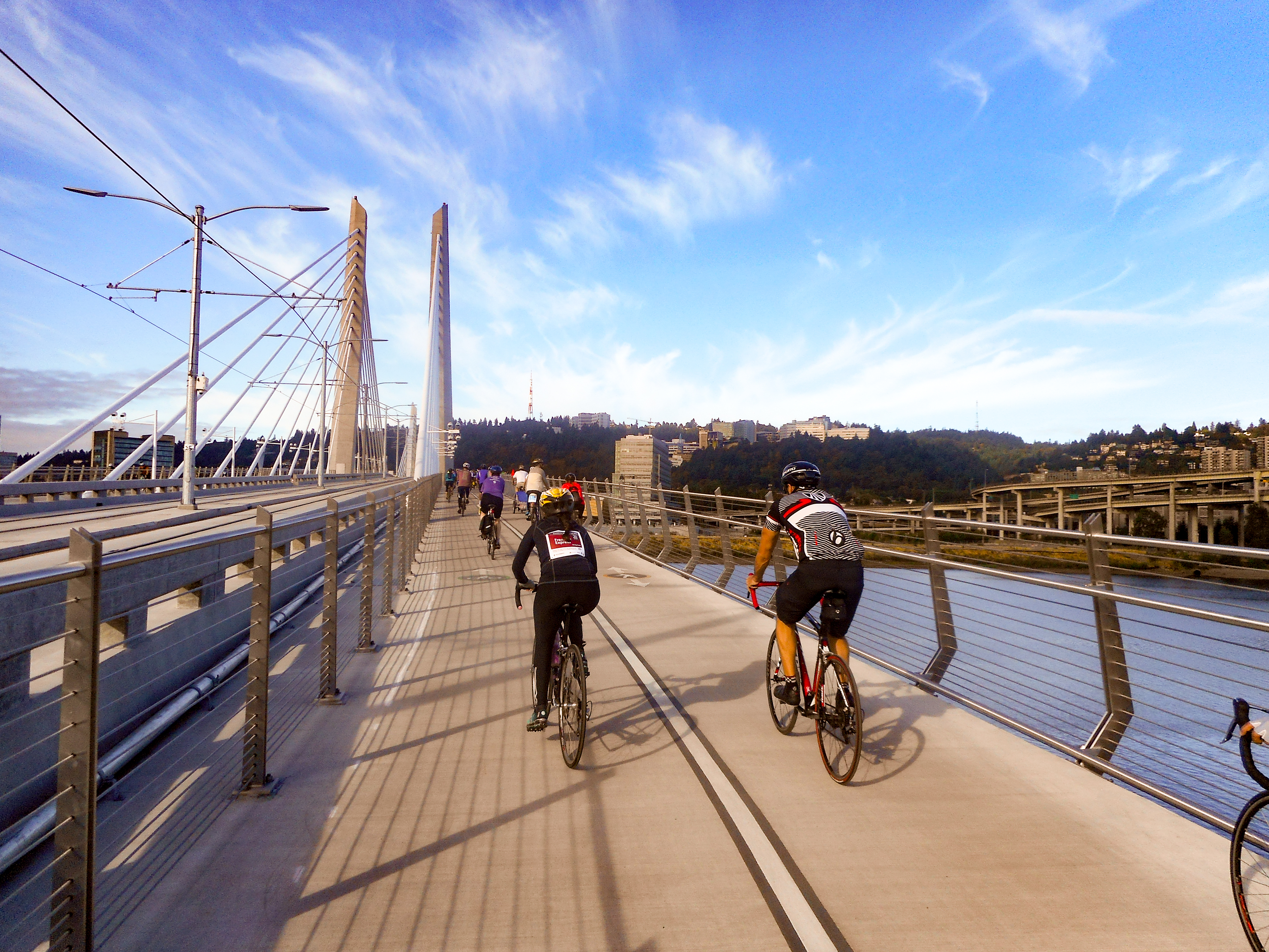
The SkyBridge should have been multimodal like the fantastic Tilikum+Crossing in Portland.

https://dailyhive.com/vancouver/pattullo-bridge-surrey-board-of-trade Of course the new PB won't have a furture provision for bus & rail on a 2nd deck.

Wednesday, December 27, 2023

Interstate I-5 Bridge Replacement over the Columbia River

 https://www.youtube.com/watch?v=eiIbdCE4-iA

The challenge is to build a new high capacity multimodal bridge that is a nice fit for Portland & not some narrow Vancouver, BC bottleneck bridge. Thus, unlike V, BC, Vancouver ,WA has the potential of getting a nice new adequate bridge.

Even modern bridges in cities should be wide enough to accomodate all sorts of transportation modes.


The old way was to bulldoze right through a neighborhood, when in many cases there were industrial areas, which could have been a less disruptive option.

Remnants of Portland's Unbuilt Freeways https://www.youtube.com/watch?v=ZeV31IcUkPM

The Forgotten Story of Harbor Drive: Portland's Demolished Freeway https://www.youtube.com/watch?v=l2_yNrP0hCY


https://therabbitportal.blogspot.com/search?q=Portland

Tuesday, December 26, 2023

Portland OR and Vancouver, WA: A Tale of Two Cities

 https://portlandreloguide.com/portland-and-vancouver-a-tale-of-two-cities

This is a stunted region, when compared to the larger scale of Greater Seattle & especially the San_Francisco_Bay_Area. Then of course there is LA, Chicago & NYC.

https://www.travelportland.com/region/vancouver

https://www.visitvancouverwa.com/blog/post/vancouver-vs-portland

https://www.portlandrealestate.com/blog/portland-vs-vancouver-wa

Greater Portland has nothing as big as Seattle's Columbia_Center or the Salesforce_Tower in SF.

https://living-inportlandoregon.com/living-in-vancouver-washington-vs-portland-oregon

https://www.columbian.com/news/2021/oct/22/skybridge-new-buildings-part-of-vision-for-vancouvers-waterfront-gateway


https://therabbitportal.blogspot.com/search?q=Portland

Tilikum Crossing in Portland vs. other bridges

The Tilikum_Crossing is the type of transit structure that should be in various parts of Greater Vancouver, BC. While such planning isn't a problem in Oregon, for BC, it might as well be something out of science fiction story.

https://trimet.org/tilikum , https://www.youtube.com/watch?v=VIYPA7jyELs

https://www.tylin.com/work/projects/tilikum-crossing-bridge-people

The North_Arm_Bridge should have had similar features to what the Tilikum_Crossing would have. Unfortunately, as part of the Canada_Line_and_Skytrain, it had to be symbolically underbuilt. Even with first phase budget limitations, the bridge could have been designed to eventually be at least as wide as what the Tilikum would be. Just because it's a light rail train line, all the stations could have been designed to eventually be 152m, like the high capacity Montreal Metro stations are, instead of the 50m joke that it has become. Thus, the Catheter_Line is one of the best examples of infrastructure financial drainage. Indeed, for all of its cost, the bridge should have been twice its width by now & the stations at least 3 times longer, simply by designing it with the potential to become a proper big city train.


https://therabbitportal.blogspot.com/search?q=Tilikum+Crossing

Tuesday, December 19, 2023

The Steel Bridge in Portland vs. the New Westminster Rail Bridge

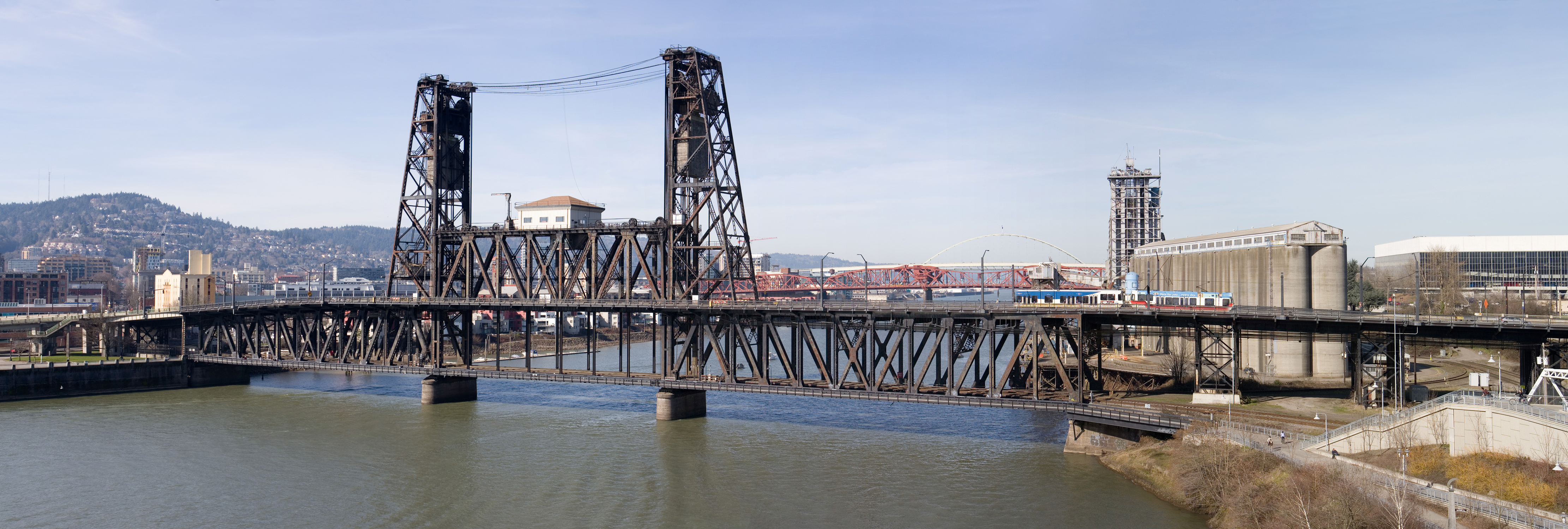
The current Steel_Bridge opened in 1912 with tremendous capacity well over a century later. Perhaps the designers looked at the narrow New Westminster Rail Bridge & decided to avoid the BC bottleneck approach to things. 

Upper: 2 outer lanes for general traffic, 2 inner lanes solely for MAX Light Rail, and sidewalks on both sides
Lower: Union Pacific Railroad (incl. Amtrak toward Eugene) and walkway.

https://en.wikipedia.org/wiki/Steel_Bridge#History - https://www.youtube.com/watch?v=r02EbmjuNfw


https://en.wikipedia.org/wiki/New_Westminster_Bridge Opened in 1904 and like so much infrastructure in BC, it wasn't built for any significant future capacity.

https://historicbridges.org/bridges/browser/?bridgebrowser=britishcolumbia/newwestminsterrailwaybridge

http://www.gvgc.ca/v_Rail.aspx

https://www.tpsgc-pwgsc.gc.ca/biens-property/construction/new-westminster-eng.html

https://thetyee.ca/News/2009/06/01/RailFix

Unlike Portland, NW never seemed to ever want to become a big bustling river city, just another provincial backwater. There was a time in the 1800s when NW could have acquired what would eventually become known as the Tri-Cities. However, that wouldn't fit within its backwater BC mentality. 

Indeed, to this day, the former BC capital & Victoria are quite small when compared to Edmonton, Regina, Winnipeg & Q. City. However, since little NW is in the middle of Greater_Vancouver, it has been gradually encouraged to take on more big city attributes.


https://therabbitportal.blogspot.com/search?q=Portland

Monday, December 18, 2023

The Steel Bridge (Portland) and Washington Avenue Transit Bridge (Minneapolis)

The Steel_Bridge and the Washington_Avenue_Bridge, if only such bridges were allowed in Greater_Vancouver...

The Steel-Bridge is old, yet adequately functioning as a multi-model crossing.

Upper: 2 outer lanes for general traffic, 2 inner lanes solely for MAX Light Rail, and sidewalks on both sides
Lower: Union Pacific Railroad (incl. Amtrak toward Eugene) and walkway. 

https://upload.wikimedia.org/wikipedia/commons/5/51/Amtrak_talgo_train_crossing_steel_bridge.jpg

"The bridge has two decks, with the lower deck designated for motor vehicle traffic and light rail trains and the upper deck used for pedestrians and bicycles (lanes specifically for bikes are on the north side)." https://en.wikipedia.org/wiki/Washington_Avenue_Bridge_(Minneapolis)

Unfortunately, the Skybridge between NW & Surrey, has no bus & bike lanes. Thus, its another fine example of backward BC planning. https://en.wikipedia.org/wiki/Skybridge_(TransLink)

Even though the SkyTrain wasn't intended to run 24hrs, no adequate future capacity provisions were included into the design of the SkyBridge. Ideally, the bridge should have had at least 3 tracks on 1 deck. Plus, 2 bus & bike lanes on another deck, with 2 lanes for emergency vehicles that would all be open 24-7. 

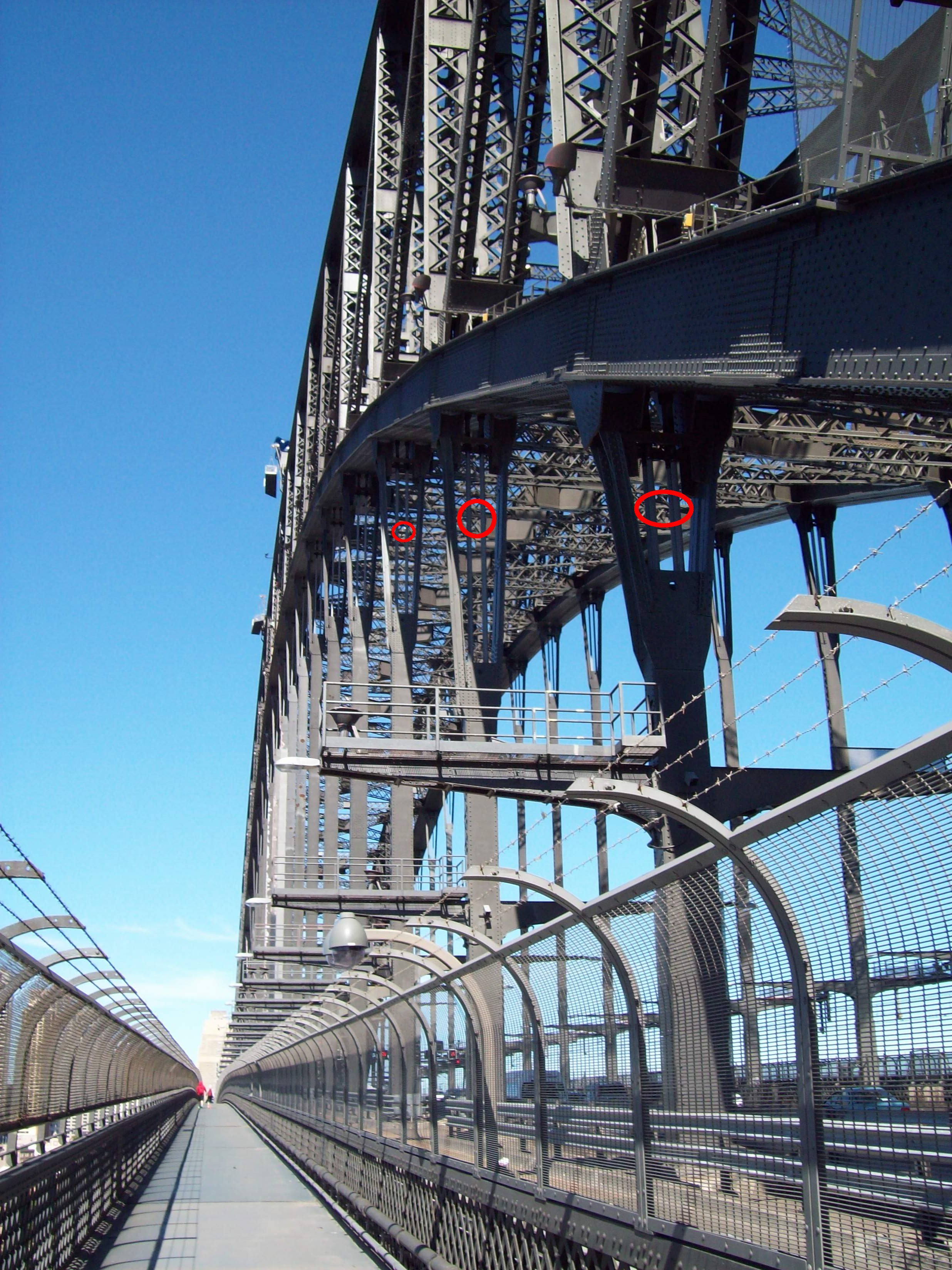
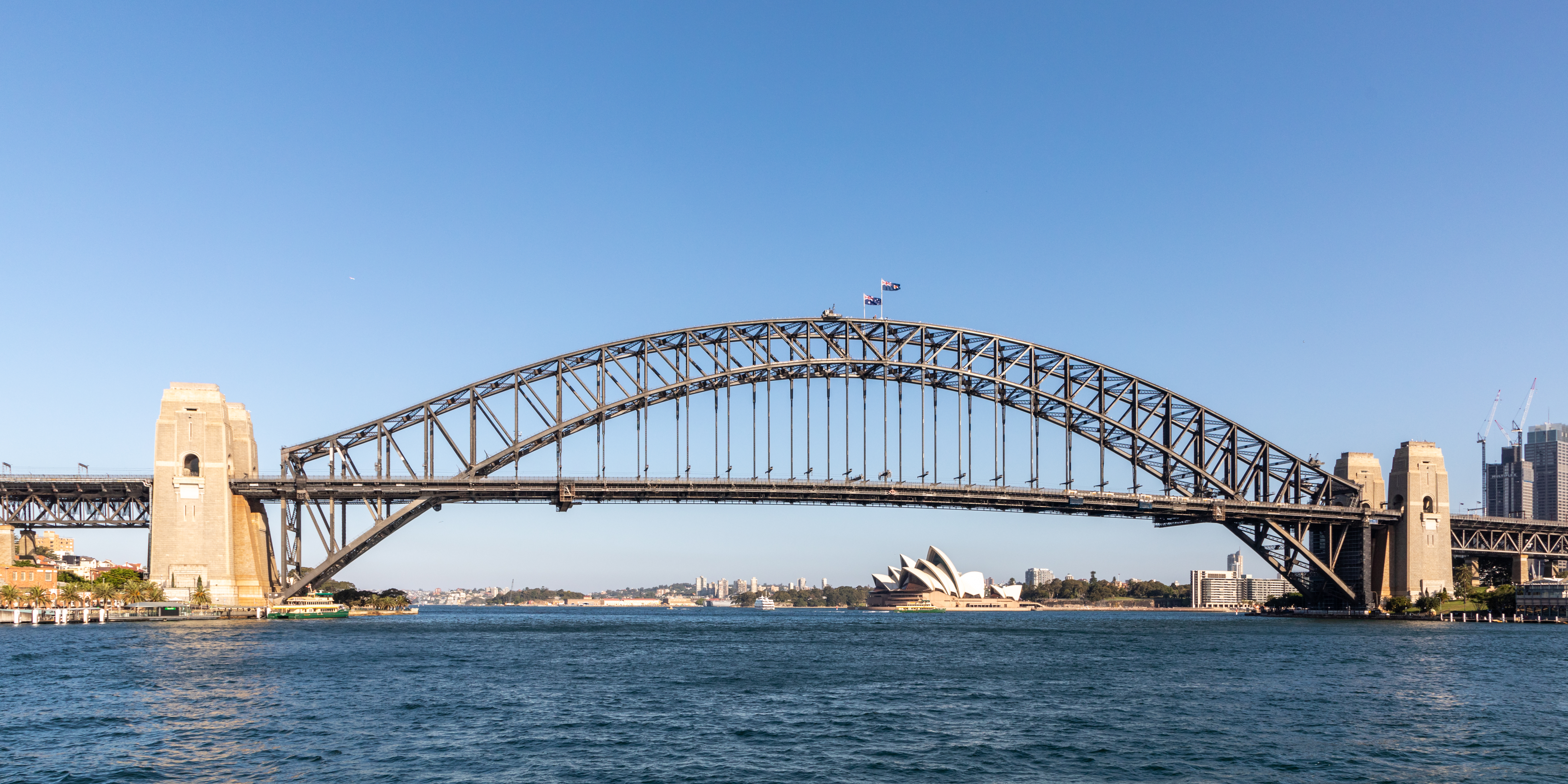
Apparently, it was better to funnel everything into the inept Pattullo_Bridge. A narrow 4 lane joke of a crossing with only 1 narrow sidewalk. Its so nice that the Sydney-Harbour-Bridge has 2 pathways. Surrey is set to become the largest city in BC. Thus, Surrey & NW should have had several bridges like Portland_OR by now.

In the 1930s, NSW already had a sense of Sydney being a substantial state capital on the Pacific for quite a while. In contrast, NW, BC emphasized its status of a former backwater provincial capital & perpetuated its small-minded city mentality.

Thus, the Sydney_Harbour_Bridge was originally built with six lanes, 4 sets of tracks & two sidewalks. Where as the Pattullo_Bridge was a fine example of backwater BC thinking & planning. Unlike the impressive Sydney_Harbour_Bridge, there is no comparable high level bridge in BC which is capable of carrying double deck passenger trains. Of course it should be noted that NSW has seen itself as a mighty state on the Pacific for quite a long time. Thus, the 1930s Sydney_Harbour_Bridge remains so far ahead of anything in backwater provincial BC.

https://en.wikipedia.org/wiki/Sydney_Harbour_Bridge_cycleway Unlike the BC aproach, NSW didn't have to remove any traffic lanes. Ultimately, Vancouver will have traffic lanes removed from 3 of its bridges, because the city refuses to build anything like the magnificent Tilikum_Crossing in Portland, OR. Vancouver was one of the first cities to get rid of its streetcars & will likely be one of the last to ever bring them back. Well fortunately, there was nothing like the BC mentality to stop the Portland_Streetcar_or_the_Tilikum_Bridge

The tram-train MAX_and_bus_on_Tilikum_the_Crossing. If only backward Vancouver, BC would allow such a fine transit bridge, then there would be less congestion on the existing narrow bridges. Indeed, Greater Vancouver refuses to build a series of bus-bridges, even though that would relieve some of the regional congestion.

Unlike in the largest urban area in BC, Portland,_OR was able to build many more bridges.

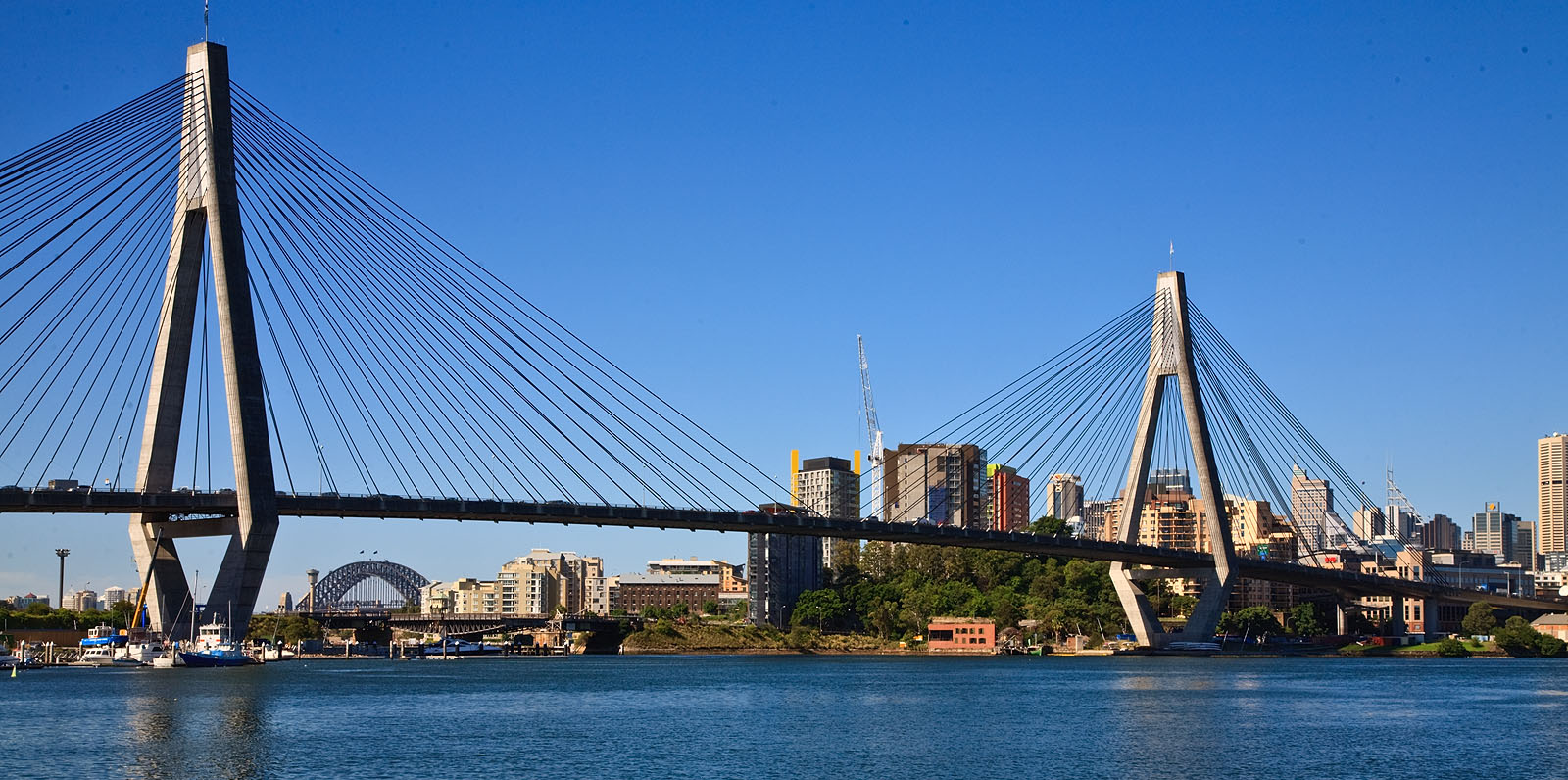
https://www.pattullobridgereplacement.ca Of course the bridge wasn't built with the provision for a lower deck similar to what's on the Tilikum Bridge. https://www.pattullobridgereplacement.ca/about/projectoverview It wasn't allowed to have 8 lanes like the Anzac_Bridge_in_Sydney. So no bus & HOV lanes, just have everything crammed into a 4 lane bottleneck. No emergency lanes, it will open with only 2 lanes each way, but with the potential to become a 6 lane bridge, some day. So, just like the Skybridge, it won't have 2 dedicated bus lanes. 

Unlike the Skybridge in NW, at least the North-Arm-Bridge to Richmond has 1 bike lane, but there should have been 2 as well as 2 bus lanes & even 2 emergency vehicle lanes on the North_Arm_Bridge. Since the North_Arm_Bridge doesn't have 24hr train service & no bus lanes, late-night buses only have the 4 lane bottlenecks that are the Oak_Street_BridgeKnight_Street_Bridge & the Queensborough_Bridge. Of course there are no emergency vehicle lanes, because even they should be subjected to the overall congestion of the region.

The Sydney_Harbour_Bridge, the Anzac_Bridge & the Tilikum_Crossing were all possible, simply because they aren't subjected to anything like the restrictions impose in Greater_Vancouver or BC in general. The BC part of Canada is trapped in some kind of a stagnation loop or a series of restrictions to stiefel or thwart infrastructure upgrades & progress. However, so many other cities around the world just aren't subjected to anything like the BC approach to things. 


https://therabbitportal.blogspot.com/search?q=Portland

https://therabbitportal.blogspot.com/search?q=Tilikum+Crossing

https://therabbitportal.blogspot.com/search?q=transit+bridges

Saturday, December 16, 2023

The Transit Mall

https://academic-accelerator.com/encyclopedia/transit-mall

https://talkofthecities.iclei.org/cities-in-action-south-koreas-first-ever-transit-mall

https://nacto.org/docs/usdg/transit_mall_case_studies_sanfran.pdf

Transit_malls are suppose to be efficient, high volume transportation corridors.

However, the Granville_Mall,_in_Vancouver, Canada seems to be a poor example.

Downtown Granville_Street used to have 6 lanes and there used to be streetcars on it until the 1950s. Indeed, that part of Granville_Street was a nice wide transportation & entertainment corridor. However, by the early 1970s, just as the downtown was starting to go through a new phase of growth, there was a plan to funnel everything into just 2 lanes on some key blocks.

https://web.archive.org/web/20120204081238/http://vancouver.ca/commsvcs/currentplanning/granvilleredesign/history.htm

A 4 lane scenario would have been a much better transit option, but this is Vancouver, a city that excels in congestive planning. Vancouver might have gotten the idea of having a 2 lane transit mall from Minneapolis

Back in the day, there just wasn't any reason to have Nicollet_Avenue to be as wide as Canal_Street,_New_Orleans or Market_Street_(San_Francisco).

However, the Nicollet_Mall should have had 2 passing lanes, instead of cramming things into only two lanes. Thus, whenever a bus breaks down or there is some emergency, half of the Nicollet_Mall can easily get blocked up.

Fortunately, Portland,_Oregon decided not to follow the Minneapolis and Vancouver, BC examples. MAX_and_bus_side-by-side_on_Portland_Mall, this is so much better than funneling everything into just 2 lanes. The Portland_Transit_Mall remains as one of the best transit corridor examples. https://en.wikipedia.org/wiki/Portland_Transit_Mall#Renovation_and_rebuilding

Again, Granville_Street in downtown Vancouver used to be 6 lanes wide. While the initial concept of the Granville_Mall was a good idea, but forcing everything into only 2 lanes just became another quintessential Vancouver example of bottleneck & congestive planning. It's all part of the narrow-minded BC mentality.

https://en.wikipedia.org/wiki/Granville_Mall,_Vancouver Of course right at some crucial blocks, the 2 lane segments provide great spots for congestion, all by design. Whenever a bus breaks down or there is some emergency, there isn't any passing lane. Thus, one side of the street remains blocked until the bus can be towed away. Of course it was considered to be a wise decision to have so many bus routes funneled through such a narrow transit corridor & then remain stubborn about ever improving the situation.

Reducing the downtown section of Granville_Street from 6 lanes to 4 would have allowed passing lanes for busses & the sidewalks could have still been widened. Plus, it would have been so much easier for emergency vehicles to get through as well. Unfortunately, Greater-Vancouver is all about creating congestion & inefficiency.

If one side of the street has a bus breakdown & the other side has some emergency requiring a bus to remain parked, there isn't an extra couple of lanes for emergency vehicles to pass on some blocks of Granville_Street. Apparently, it was deemed essential & appropriate to have such a bottleneck on what is suppose to be an efficient, high volume bus corridor.

Of course Vancouver was one of the first cities to get rid of its streetcars or trams. It will likely be one of the last cities to ever bring them back. Fortunately, the Vancouver mentality was unable to stop Seattle & Portland from reinstating some of their streetcar routes.

A comparative study of central city station catchments in TorontoSan Francisco, and Melbourne - https://www.sciencedirect.com/science/article/pii/S096669232100209X All 3 of these big & dynamic cities never went the way of backwater Vancouver.

Greater Vancouver should be able to have a fast-bus network as good & extensive as what's in Curitiba, Brazil someday. https://en.wikipedia.org/wiki/Curitiba#Transportation

Ideally, any city should have at least one passing lane on a bus corridor. Of course there can also be more crossover sections to enable trams & streetcars to pass temporarily obstructed areas.


https://therabbitportal.blogspot.com/search?q=transit+malls

Monday, December 4, 2023

Proposed SFU gondola popular, but not among some who’d live under it

 https://vancouver.citynews.ca/2023/12/04/sfu-burnaby-gondola-pushback-neighbourhood

This tech is all over the world, but having it in Burnaby, BC is getting some persistent resistance. 

https://www.translink.ca/gondola?utm_source=direct&utm_medium=shorturl&utm_campaign=gondola

The BC mentality wasn't able to stop the Portland_Aerial_Tram from being built.

However, there are still plenty of people that don't like it going over their Portland houses.

https://en.wikipedia.org/wiki/Portland_Aerial_Tram#Community_response

So while it could be a great transportation link, not everyone is happy about such urban gondola-trams.

https://www.burnaby.ca/our-city/projects/burnaby-mountain-gondola It really could be a good transportation link, but local residents might want some reasonable compensation. Not just some new blinds or curtains.


https://en.wikipedia.org/wiki/Sandia_Peak_Tramway


https://www.grousemountain.com/skyride

https://dailyhive.com/vancouver/grouse-mountain-new-gondola-construction


https://en.wikipedia.org/wiki/Sugarloaf_Mountain#Cable_car

https://en.wikipedia.org/wiki/Peak_Tram


https://en.wikipedia.org/wiki/Table_Mountain#Cableway

Wednesday, November 15, 2023

Tuesday, November 14, 2023

The very narrow The Lions Gate Bridge in Vancouver

 https://en.wikipedia.org/wiki/Lions_Gate_Bridge

 "The 1933 bylaw authorizing construction included a provision mandating that "no Asiatic person shall be employed in or upon any part of the undertaking or other works". https://en.wikipedia.org/wiki/Lions_Gate_Bridge#History

https://www150.statcan.gc.ca/n1/daily-quotidien/221026/dq221026b-eng.htm While Canada has allowed for more diversity over the decades, Canada has nowhere near  even 1% of the world's' population. It's been a struggle just for Canada to accommodate half of 1% of the human population.

Unfortunately for most of the 20th century, Vancouver was to remain as just a provincial backwater for as long as possible. For had the city been allowed to flourish onto the scale of the likes of SydneySan_Francisco or even Seattle, that would mean there would be a lot more people. Which means more non-white people and that was just too uncomfortable a notion for the White colonial mindset.

Of course the colonial mindset could be seen all over the world, but so many other cities weren't thwarted like Vancouver and Victoria. You will never find any official BC mandate revealing that it was to remain as a provincial backwater for as long as possible. 

Thus, the local power structure continually tried to hold things back for most of the cities history. A multigenerational stunted growth policy is a clever way to slow a city and province down. Calgary and Seattle became big business cities, because they aren't under any BC type restrictions.

One only look at what Alberta and Washington_(state) have been able to do, because they aren't in BC.

https://en.wikipedia.org/wiki/Alberta#Transportation

https://en.wikipedia.org/wiki/Washington_(state)#Transportation

The 12 lane Ship_Canal_Bridge in Seattle is the closest big & wide bridge to V-BC. Although the Port_Mann_Bridge is much closer, it only has 10 lanes. Unfortunately, both bridges don't have any existing rail component. 

Fortunately, Vancouver, WA wasn't forced to indefinitely endure a 3 lane bottleneck like V-BC has.

The planners of the Sydney_Harbour_Bridge didn't have a backwater BC mindset. However, after several decades, the SHB was augmented by the Sydney_Harbour_Tunnel. Unfortunately, there was no provision for a 3rd lane each way to allow for express buses.

https://www.transport.nsw.gov.au/projects/current-projects/western-harbour-tunnel-and-warringah-freeway-upgrade How is this possible? Of course NSW isn't under any backwater BC type restrictions.

https://caportal.com.au/rms/wht

The Western_Harbour_Tunnel should have had an extra section for future express busses or even another train line. 

While something like the Sydney_Metro should have already gone under the harbour decades ago, at least it's not as late to the party like Vancouver is.

"Stage 1 (Metro North West) operates with 6-car trains running on 4-minute headways. After the addition of the Stage 2 extension to Bankstown, the stations’ platforms will be configured to allow for future use of 8-car trains and the signalling system designed to allow for 2-minute headways, both of which are planned to be introduced once sufficient patronage demands it. Eight-car trains have a design capacity of 1,539 customers and increasing the running frequency to ultimately 30 trains per hour (2-minute headway) would provide a maximum capacity of 46,170 passengers per hour per direction." https://en.wikipedia.org/wiki/Sydney_Metro#Capacity 

"In the event that extensions to 8 cars happens if sufficient demand warrants the contract, two infill carriages will be added between cars 05 and 06." https://en.wikipedia.org/wiki/Sydney_Metro_Metropolis_Stock#Service_formation This allowace for such expansion just isn't part of the BC mentality, but for NSW, it's not a problem.

With the Lions_Gate_Bridge being so narrow, it's impossible to have proper HOV & express bus lanes. Yet for decades, the city refuses to build a bus & HOV tunnel.

Although Portland is a stunted city when compared to Seattle, Portland still has a much better set of bridges than Vancouver, BC. 

https://en.wikipedia.org/wiki/Metro_Vancouver_Regional_District

https://en.wikipedia.org/wiki/Portland_metropolitan_area,_Oregon


https://therabbitportal.blogspot.com/search?q=bridges

https://therabbitportal.blogspot.com/search?q=BC

https://therabbitportal.blogspot.com/search?q=Seattle

Monday, June 19, 2023

Multimodal Bridges and Tunnels

 https://oklahoma.gov/content/dam/ok/en/odot/federal-grants/raise/2023/multimodal-connections-on-i-35-over-the-oklahoma-river/application/Project%20Description.pdf

There used to be a time, especially in the mid 20th century, when several bridges were built with narrow sidewalks, or none at all. Forget about emergency lanes & especially not allowing for bus & bike lanes. Just have the crossing get all plugged up, so you are still punished, even if you use public transit.

http://waterlooarchitecture.com/bridge/blog/2018/09/14/multimodal-manila

https://www.bloomberg.com/news/articles/2014-08-19/why-portland-is-building-a-multi-modal-bridge-that-bans-cars This is one of the best bridges of its type in the world. The Interstate bridges in downtown Portland,_Oregon have no bike and pedestrian access. However, the Tilikum_Crossing was intended to be a nice counterbalance. https://en.wikipedia.org/wiki/Tilikum_Crossing#Design

https://en.wikipedia.org/wiki/Providence_Bridge_Pedal

Vancouver, BC could have really benefited from something like the Tilikum_Crossing_in_Portland. However, no such streetcar or tram-train bridge exists in Vancouver, BC. Fortunately, Portland & Seattle were able to revive some of their old streetcar lines. Cities like New Orleans, Philadelphia, Boston, Toronto, SF & Melbourne retained some of their streetcar or tramlines, unlike Vancouver. 

https://publications.gc.ca/collections/collection_2012/tc/T41-1-50-eng.pdf

The George_Massey_Tunnel in BC, Canada is a sad joke. It wasn't designed to accommodate 2 bus & bike lanes. No footpaths & no emergency lanes. It is a fine example of BC bottleneck planning. The Louis-Hippolyte_Lafontaine_Bridge-Tunnel in Montreal, is slightly a little better.

https://www.highway99tunnel.ca While this new tunnel will have 2 bus - HOV lanes & a bike path, there is no provision for a train connecting the airport to the ferry terminal. https://www.delta-optimist.com/local-news/interurban-rail-not-on-the-horizon-for-delta-6448841 This means that eventually some day, a new train tunnel or bridge will have to be built to provide a rail link between the Tsawwassen_ferry_terminal and the Vancouver_International_Airport

Some day, when enough sensible people can implement proper big city regional planning, a train could run from Waterfront_station_(Vancouver) to the Park_Royal_Shopping_Centre and onto the Horseshoe_Bay_ferry_terminal. Unfortunately, backward & slow-moving Vancouver is only just starting to think about having its own version of a North_Shore_railway_line.

https://www.websiteplanet.com/blog/best-green-web-hosting-services

Whether its for environmental reasons or just for overall efficiency, transportation corridors that are designed for various modes of of transit, can effectively move more people.


https://therabbitportal.blogspot.com/search?q=BC

https://therabbitportal.blogspot.com/search?q=bridges

https://therabbitportal.blogspot.com/search?q=highways